How can we help you today?


For Business Owners, Chief Marketing Officers, and Financial Directors operating across the competitive United Kingdom digital landscape, capital allocation is a relentless balancing act. The enduring debate between organic search optimization and paid advertising is rarely just a marketing decision it is a fundamental financial strategy that dictates enterprise growth, cash flow stability, and overall brand valuation. Knowing which daily SEO metrics to track while simultaneously analyzing Paid Ads performance is the secret to engineering a high-yielding acquisition engine.
When evaluating marketing budget allocation, executive leadership often faces a stark dichotomy. Paid advertising (such as Google Ads, LinkedIn Sponsored Content, and Meta Ads) delivers immediate, predictable pipeline velocity, but it acts like a tap: the moment you stop paying, the lead flow ceases entirely. Conversely, Search Engine Optimisation (SEO) requires patience and upfront capital investment, but it builds digital equity an enduring asset that compounding over time to dramatically lower your blended customer acquisition cost (CAC).
To achieve maximum Return on Investment (ROI), financial decision-makers must abandon the “either/or” mindset. A resilient, long term marketing strategy synchronizes both channels into a unified financial model. This comprehensive corporate guide explores the unit economics of organic versus paid acquisition, reveals the exact performance metrics financial directors must monitor daily, and provides a framework for balancing your marketing spend to maximize long-term enterprise value.
To understand how to allocate capital effectively between SEO and Paid Ads, financial directors must evaluate digital channels through traditional balance sheet principles: renting temporary attention versus owning permanent equity.
[Paid Advertising (PPC)]                  [Organic Search (SEO)]
- Rented Digital Real Estate              - Owned Digital Asset (Equity)
- Linear Cost-to-Acquisition Model        - Compounding ROI Over Time
- Immediate Pipeline Velocity             - Long-Term Defensive Moat
- Zero Residual Traffic Value             - High Residual Value Post-Spend
Paid Search and Paid Social operate on an auction-based cost-per-click (CPC) or cost-per-thousand-impressions (CPM) model. While this mechanism allows enterprises to target high-intent B2B or B2C buyers within hours of campaign launch, it exposes the business to severe market inflation.
In mature UK sectors such as SaaS, legal services, and industrial manufacturing, CPCs have increased steadily year-over-year due to ad auction saturation. If an enterprise relies exclusively on paid channels, its customer acquisition cost will inexorably rise alongside competitor bidding. Furthermore, paid ad spend generates zero residual equity; once your daily budget is exhausted, your market visibility drops to zero.
SEO operates on a compounding capital growth model. Optimizing site architecture, earning high-authority domain backlinks, and publishing comprehensive, expert-led content requires an initial financial outlay that yields delayed revenue gratification during the foundational phase (typically months 1 to 6).
However, once top-three organic visibility is achieved for high-intent commercial terms, the economic dynamics flip entirely. The cost of generating each additional incremental lead drops toward zero, driving down your blended CAC across the entire business. Unlike paid ads, a well-engineered organic footprint acts as a defensive economic moat that continues to deliver qualified commercial prospects even during periods of corporate budget contraction.
To justify ongoing capital allocation, financial directors and business owners cannot rely on surface-level marketing vanity metrics like total raw traffic or ad impressions. You must evaluate both channels through rigorous financial unit economics.
| Financial Metric | Paid Advertising (PPC) Focus | Organic Search (SEO) Focus | Strategic Objective |
| Customer Acquisition Cost (CAC) | Fixed or rising CPCs; immediate attribution. | High upfront cost; drops toward zero over time. | Minimize blended acquisition costs across all channels. |
| Time-to-Payback (CAC Payback) | Rapid (days to weeks depending on sales cycle). | Deferred (6 to 12 months for asset maturity). | Accelerate immediate cash flow while building equity. |
| Lifetime Value to CAC (LTV:CAC) | Typically hovers around 2:1 to 3:1 in competitive niches. | Can scale to 10:1 or higher as content assets mature. | Target an aggregate enterprise LTV:CAC ratio ≥ 4:1. |
| Marginal Cost of Acquisition | Increases as you scale into broader, less qualified audiences. | Decreases as domain authority and brand trust compound. | Scale enterprise revenue without linear ad spend increases. |
To maintain total visibility over your capital efficiency, understanding which daily SEO metrics to track is essential. While monthly executive reporting provides macro trends, day-to-day monitoring by your technical teams ensures that organic investments remain aligned with financial KPIs:
Organic Conversion Rate by Landing Page: Track whether your high-intent commercial pages are actively converting traffic into pipeline value, rather than just generating passive readership.
Keyword Movement in Commercial Bottom-of-Funnel (BoFu) Zones: Daily tracking of positions 1 through 5 for terms directly tied to procurement (e.g., “enterprise cloud software UK,” “B2B SEO agency London”).
Core Web Vitals and Indexation Health: Technical stability dictates organic survival; monitoring daily crawl errors ensures your digital assets remain visible to search engines.
The most common error business owners make is swinging wildly between aggressive ad spending and sudden organic investment based on quarterly cash flow pressures. Achieving maximum ROI requires a structured, hybrid budgeting framework that evolves as your business matures.
Recommended Budget Split: 70% Paid Ads / 30% SEO
Strategic Rationale: For a new market entry or a freshly launched domain, organic search visibility is near zero. Capital must be heavily weighted toward Paid Search (Google Ads) and targeted LinkedIn advertising to generate immediate cash flow, test value propositions, and gather conversion data. Simultaneously, 30% of the budget is allocated to technical SEO foundations, site architecture, and initial high-authority content creation to initiate the compounding cycle.
Recommended Budget Split: 50% Paid Ads / 50% SEO
Strategic Rationale: As organic content assets begin to mature and capture first-page rankings for informational and commercial investigative terms, your dependency on expensive paid traffic decreases. Financial directors should systematically reallocate capital from underperforming paid campaigns into scaling organic content production and authority building, stabilizing overall CAC.
Recommended Budget Split: 30% Paid Ads / 70% SEO
Strategic Rationale: By month 18, a mature digital enterprise should derive the majority of its inbound pipeline from high-margin organic search. Paid ad spend is no longer used for broad acquisition; instead, it is deployed surgically for hyper-targeted retargeting campaigns, defending brand terms against competitors, and testing new product verticals before scaling them organically.
To see how professional digital growth architects structure conversion-focused acquisition ecosystems that balance immediate revenue with long-term asset building, review the comprehensive operational frameworks outlined on our our services portal.
One of the greatest advantages of running a balanced marketing budget is the ability to use cross-channel intelligence to de-risk capital allocation. SEO requires significant upfront time and resources; guessing which keywords will generate commercial revenue is a gamble financial directors should never take.
[Paid Ads Campaign Execution] ──► Test Keyword Conversion Rates & Ad Copy CTR
                                                │
                                                ▼
                                    [Extract Proven BoFu Winners]
                                                │
                                                ▼
[SEO Content & Technical Architecture] ──► Build Evergreen Organic Assets Around Proven Terms
By leveraging Paid Search as a data laboratory, marketing leads can rapidly test hundreds of search queries, headline variations, and landing page offers. Once the PPC data conclusively proves which specific search terms yield the highest closing rates and enterprise deal sizes, financial directors can confidently greenlight heavy organic SEO investments targeting those exact terms.
This analytical bridge eliminates organic guesswork, ensuring every pound spent on content creation and technical landing page optimisation is anchored to a proven commercial outcome.
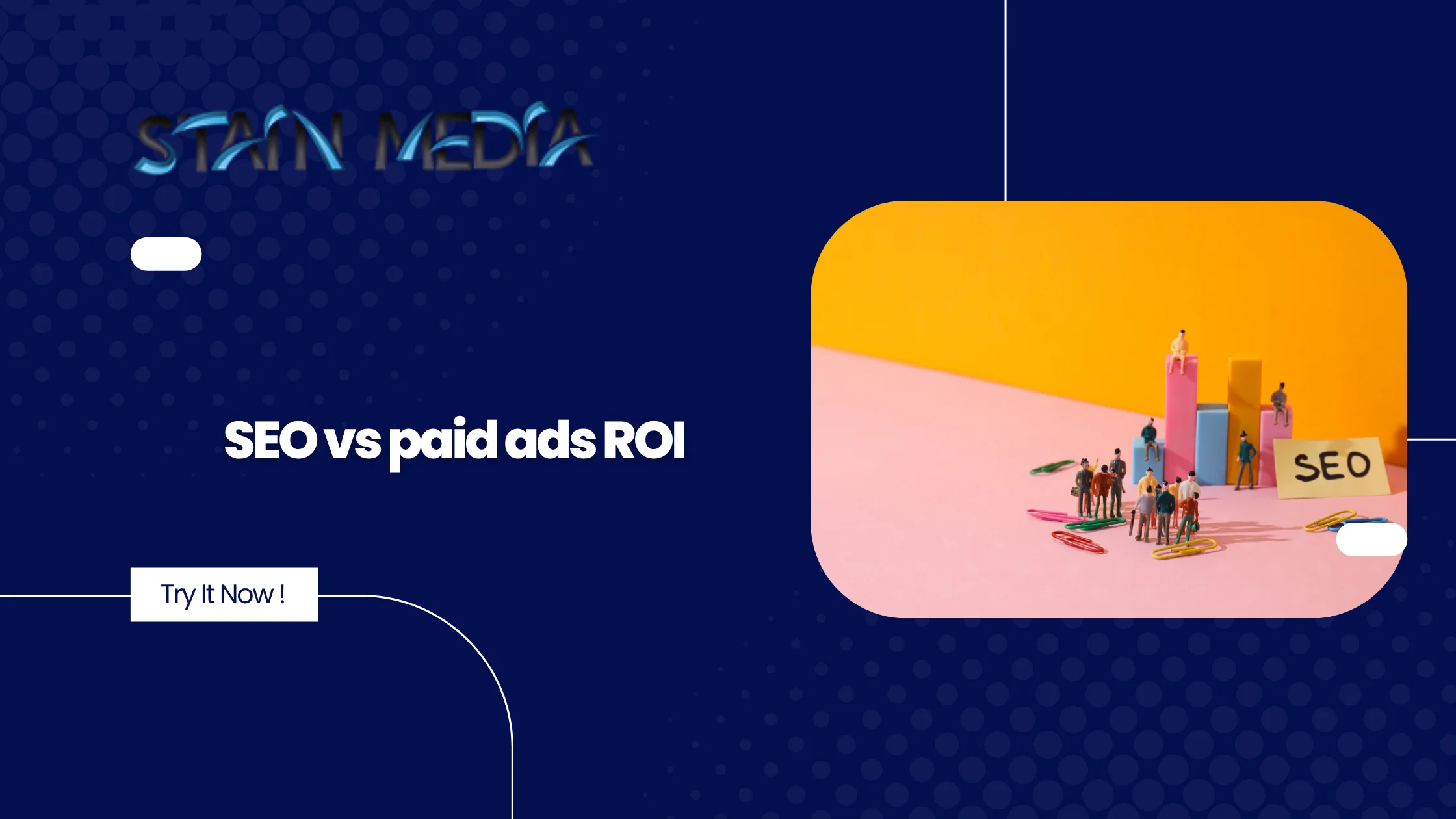
One of the most profound points of friction between marketing leadership and finance departments is the misinterpretation of channel attribution. When evaluating marketing budget allocation, Financial Directors frequently rely on legacy Last-Click Attribution models within analytics dashboards. This approach creates a severe analytical blind spot that artificially inflates the perceived value of Paid Search while systematically discounting the foundational contribution of organic SEO.
[The Multi-Touch Buyer Journey]
1. Discovery (SEO) ────► 2. Consideration (Retargeting Ad) ────► 3. Conversion (Direct/Brand Search PPC)
   * Last-Click Model assigns 100% of revenue credit to Step 3 (Paid Search).
   * Data-Driven Model distributes equity across all touchpoints, proving SEO's initiation value.
In complex B2B sales cycles or high-ticket consumer transactions across the UK, a buyer rarely converts on their first visit. A typical corporate procurement officer might first discover your brand via an organic informational article answering a complex technical query (SEO). Two weeks later, they might see a targeted case study via LinkedIn Sponsored Content (Paid Social). Finally, ready to request a proposal, they type your brand name into Google and click a branded paid search ad (PPC).
Under a simplistic Last-Click attribution model, the paid search channel receives 100% of the financial credit for that closed revenue, while the organic search channel receives zero. As a result, a Financial Director might mistakenly slash the SEO budget, only to see overall paid conversion velocity inexplicably collapse months later because the top-of-funnel discovery engine was dismantled.
To protect enterprise value and maintain true visibility over your customer acquisition cost, financial leadership must enforce advanced Multi-Touch Attribution (MTA) or algorithmic Data-Driven Attribution models within Google Analytics 4 (GA4) and enterprise CRM environments (such as Salesforce or HubSpot). These frameworks evaluate the entire conversion path, mathematically assigning fractional credit to every channel that influenced the deal.
When CFOs evaluate performance through an MTA lens, organic search consistently proves itself as the most cost-effective initiator of high-value commercial pipeline, justifying sustained capital investment even when immediate last-click conversions appear skewed toward paid advertising.
During macroeconomic downturns, corporate budget contractions, or periods of inflation, executive leadership instinctively looks to reduce operational expenditure (OpEx). Historically, marketing budgets are the first line items to be slashed. However, how a Financial Director executes these cuts dictates whether the enterprise survives the downturn or permanently loses market share to more strategic competitors.
When faced with cash flow constraints, cutting paid advertising budgets is a logical, immediate cash-preservation lever. Because PPC is linear, reducing ad spend instantly stops cash outflow. While incoming lead volume will drop proportionally, the structural integrity of your website remains unaffected.
Conversely, eliminating expenditures allocated to your organic long term marketing strategy is financial self-sabotage. SEO is not a light switch; it is a flywheel driven by momentum. If an enterprise halts content engineering, technical optimization, and authority acquisition during a downturn, three negative economic consequences occur:
Loss of Algorithm Rank Equity: Search engines continuously crawl and re-evaluate digital ecosystems. A stagnant domain rapidly loses topical authority and keyword rankings to aggressive competitors who continue investing during the recession.
The Cost of Reclaiming Ground: Once top-three organic visibility is lost for high-value commercial terms, reclaiming those positions during an economic recovery requires three to five times the financial expenditure and time duration than maintaining them would have cost.
Severe Margin Compression Post-Recovery: When the market rebounds and the enterprise turns its paid ad campaigns back on, it will face hyper-inflated CPCs without the defensive cushion of organic traffic, resulting in severe gross margin compression.
By treating organic search optimization as an immutable capital asset rather than a discretionary marketing expense, corporate leadership ensures the business maintains a steady stream of low-cost inbound revenue throughout economic cycles.
To transition an organization from a fragmented budgeting approach into an integrated, high-yielding acquisition model, Financial Directors and Chief Marketing Officers should implement this standardized operational protocol:
| Protocol Stage | Operational Action | Verification & KPI Threshold |
| Step 1: Audit Current Unit Economics | Isolate blended CAC from channel-specific CAC. Calculate the exact time-to-payback for both paid search and organic acquisition over the trailing 12 months. | Identify any paid campaign where LTV:CAC has fallen below 2:1 due to CPC inflation. |
| Step 2: Enforce Multi-Touch Attribution | Transition corporate reporting out of Last-Click models into GA4 Data-Driven Attribution to map true cross-channel influence and discovery value. | Confirm percentage of closed enterprise revenue initiated by organic landing pages. |
| Step 3: Track Daily Leading Indicators | Instruct technical teams to report on essential daily SEO metrics to track, including indexation stability, crawl efficiency, and BoFu keyword rankings. | Zero critical GSC technical regressions; upward trajectory in bottom-of-funnel rankings. |
| Step 4: Execute the Reallocation Ratio | Systematically reallocate 10% to 15% of underperforming paid ad spend into evergreen organic content assets and technical infrastructure every quarter. | Stabilize and progressively lower blended enterprise CAC quarter-over-quarter. |
| Step 5: Protect Brand Moats | Restrict broad-match paid search bidding. Focus PPC spend strictly on high-intent commercial terms and defending branded search queries against competitor conquesting. | Reduce wasted PPC ad spend by ≥ 20% while maintaining total inbound lead volume. |
To understand how high-growth digital enterprises architect scalable, cross-channel frameworks that maximize capital efficiency across both paid and organic ecosystems, explore the foundational growth engineering models available at Stain Media.
For an established enterprise domain with existing technical foundations, a targeted organic growth campaign typically begins lowering blended customer acquisition cost within 4 to 6 months. For a brand-new domain or a business entering a hyper-competitive UK vertical (such as fintech, enterprise SaaS, or insurance), the compounding crossover point where organic cost-per-lead becomes mathematically cheaper than paid search generally occurs between 9 and 12 months of sustained, authoritative investment.
Yes, but with strict budget caps and low target CPA bids. While ranking #1 organically for your brand name is essential, aggressive competitors will actively bid on your trademarked terms (brand conquesting) to intercept your high-intent buyers at the top of the ad stack. Running a low-cost branded PPC campaign acts as a low-cost insurance policy, ensuring your enterprise dominates the entire above-the-fold SERP real estate and prevents competitor interception.
Three financial warning signs indicate severe budget misalignment:
Rising Blended CAC Alongside Increased Spend: If your overall acquisition cost rises every time you increase marketing spend, you are over-reliant on inflationary paid auction channels and lack organic scale.
The 80/20 Paid Dependency Trap: If more than 80% of your inbound revenue is generated by active ad campaigns, your business valuation is severely depressed because you own zero digital equity.
Flat Organic Impressions: If your GSC impressions remain flat or declining over a two-quarter rolling window, your organic strategy is failing to capture expanding market search demand.
In the modern corporate economy, the debate between SEO and Paid Ads is functionally obsolete. Treating these acquisition channels as opposing forces wastes capital, fragments internal teams, and inflates acquisition costs. True commercial dominance is achieved when executive leadership bridges the gap between daily execution and long-term financial strategy.
By mastering the unit economics of digital real estate, transitioning to sophisticated multi-touch attribution models, and diligently monitoring critical daily SEO metrics to track, Financial Directors can deploy capital with absolute precision. Use Paid Ads as your tactical, high-velocity discovery engine to test markets and drive immediate cash flow; use SEO as your compounding, long-term defensive asset to systematically crush your customer acquisition cost and build permanent enterprise equity. When both channels operate in seamless financial synchronization, your marketing budget transforms from an operational expense into an unstoppable commercial growth engine.
Ready to audit your acquisition unit economics and construct a high-converting digital infrastructure tailored to your commercial growth goals? Connect directly with our senior digital growth architects and technical SEO strategists today by visiting our dedicated contact us portal to schedule your confidential executive consultation.

We’re Global Digital
Agency Since-2018 to Provide Smart
Solutions
